
- Kettle-River
How to Tell When Your Patio Needs More Than Routine Repairs
An existing patio can still look usable while no longer serving the home as well as it should. Cracks, uneven areas, poor drainage, repeated repairs, or limited space can all make the patio harder to enjoy and maintain over time.
In many cases, homeowners try to repair small issues for years before realizing the patio needs a more complete upgrade. Knowing the signs early can help them decide whether simple repairs are still enough or whether replacement would create a safer, more attractive, and more functional outdoor space.
This blog explains the common signs that it may be time to replace or upgrade an existing patio and how those changes can improve long-term outdoor living.
1. Large Cracks or Uneven Sections Keep Getting Worse
Small surface imperfections are common as patios age, but larger cracks and uneven sections often indicate that the problem extends beyond normal wear. When these issues continue growing despite repairs, they can affect both the appearance and functionality of the outdoor space. Paying attention to these changes early can help homeowners determine whether repairs are still practical.
When damage becomes more than cosmetic
Hairline cracks may only affect the patio’s appearance, but wider cracks, loose sections, or noticeable movement can suggest that the surface is beginning to deteriorate. As these problems become more pronounced, they may continue spreading and make the patio more difficult to maintain.
Repeated repairs to the same damaged areas can also become less effective over time. When deterioration continues despite ongoing maintenance, replacing or upgrading the patio may offer a more reliable long-term solution.
How uneven surfaces affect safety
An uneven patio can create trip hazards that make the outdoor space less comfortable and less safe for everyday use. Raised sections, sunken areas, or shifting materials can affect how people walk across the surface and may become more noticeable as the patio continues to age.
These changes can also make it difficult to place outdoor furniture securely or enjoy the patio as intended. Restoring a level, stable surface through an upgrade can improve both safety and the overall usability of the outdoor living area.
2. Water No Longer Drains Away Properly
A well-built patio should direct water away from the surface instead of allowing it to collect after rainfall or routine cleaning. If puddles remain for long periods or water repeatedly gathers in the same locations, it may indicate that the patio is no longer draining as intended. Over time, poor drainage can affect both the condition of the patio and the surrounding landscape.
How poor drainage affects the patio
Standing water keeps sections of the patio damp for longer than they should be, increasing the likelihood of stains, organic growth, and gradual surface deterioration. It can also wash away joint material, contribute to erosion beneath the patio, or affect the stability of certain areas over time.
As these conditions continue, the patio may require more frequent maintenance and repairs. Addressing the drainage issue through an upgrade can help restore proper water flow and improve the patio’s long-term performance.
Why standing water can lead to bigger issues
Water that remains on the patio after every rainstorm can gradually create additional problems beyond surface discoloration. Moisture may affect nearby landscaping, increase the risk of slippery surfaces, or contribute to movement in the patio if the underlying base begins to weaken.
Improving drainage during a patio replacement or upgrade helps protect the outdoor space from these ongoing issues. It also allows the patio to dry more quickly, making it more comfortable and enjoyable to use throughout the year.
3. The Patio No Longer Fits Your Outdoor Lifestyle
A patio that worked well years ago may no longer meet the needs of the household today. As families grow and outdoor living habits change, homeowners often find that the existing space feels too small, lacks useful features, or no longer supports the way they want to use their backyard. In these situations, the issue is not the condition of the patio but its functionality.
When the space feels too small or outdated
An older patio may not provide enough room for outdoor dining, entertaining, or additional seating. Homeowners may also find that the design, materials, or layout no longer complement the style of the home or the rest of the landscape.
Expanding or redesigning the patio can create a more comfortable outdoor area that better reflects current needs. A larger or updated layout often provides greater flexibility for everyday use and future gatherings.
How an upgrade can improve functionality
Replacing or upgrading a patio allows homeowners to improve more than just its appearance. Features such as built-in seating, wider walkways, better drainage, fire pits, outdoor kitchens, or designated gathering areas can make the space more practical and enjoyable.
An updated design also allows the patio to work more effectively with the rest of the property. Creating a layout that supports how the space is actually used helps homeowners get more value from their outdoor living area.
4. Repairs Are Becoming More Frequent
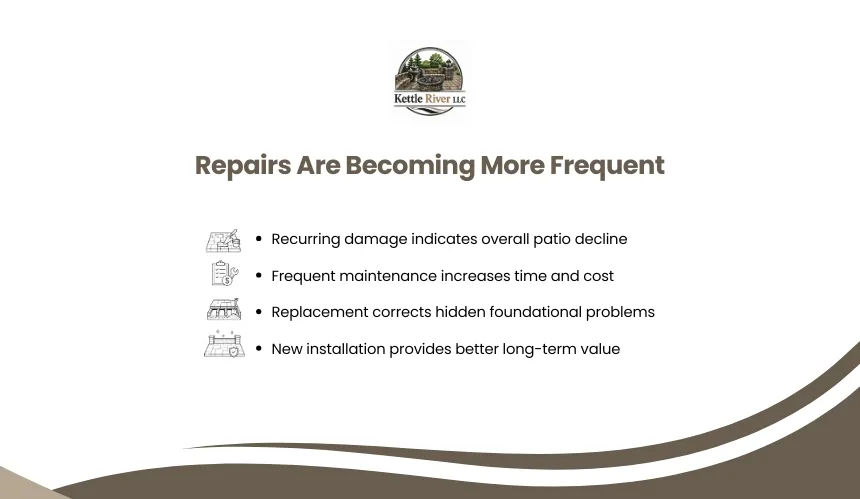
Every patio requires occasional maintenance, but repeated repairs can become a sign that the surface is reaching the end of its useful life. If the same problems continue returning or new issues appear every season, homeowners may spend more time maintaining the patio than enjoying it. At that point, it is worth considering whether ongoing repairs remain the most practical solution.
When ongoing maintenance becomes less practical
Replacing loose pavers, filling cracks, resetting uneven sections, or addressing drainage problems once in a while is a normal part of patio ownership. However, when these repairs become increasingly frequent or begin affecting multiple areas of the patio, the overall condition may be declining beyond what routine maintenance can reasonably address.
As repair needs continue to grow, the time and cost involved may also increase. Repeated maintenance can eventually become less efficient than investing in a more comprehensive upgrade.
Why replacement may provide better long-term value
Replacing an aging patio provides an opportunity to correct underlying issues instead of repeatedly repairing visible symptoms. A new installation can address concerns such as an unstable base, poor drainage, outdated materials, or a layout that no longer meets the homeowner’s needs.
Although replacement is a larger investment upfront, it may reduce future maintenance demands and provide a more durable outdoor living space. Looking at the patio’s long-term performance rather than only the next repair often leads to a more informed decision.
Frequently Asked Questions
Can a patio be upgraded without replacing the entire surface?
In some cases, yes. Depending on the condition of the patio, homeowners may be able to update certain sections or add new features without completing a full replacement.
How long does a typical patio last?
The lifespan varies depending on the material, installation quality, weather conditions, and maintenance. Well-built patios can remain functional for many years with proper care.
Is uneven settling always a sign that a patio should be replaced?
Not always. Minor settling can sometimes be repaired, but widespread or recurring movement may indicate larger issues that require a more comprehensive solution.
Should drainage problems be addressed before replacing a patio?
Yes. Correcting drainage issues during a replacement or upgrade helps protect the new patio and supports better long-term performance.
Is it better to keep repairing an old patio or replace it?
The answer depends on the extent of the damage, the frequency of repairs, and the overall condition of the patio. When repair needs become frequent, replacement may provide greater long-term value.