
- Kettle-River
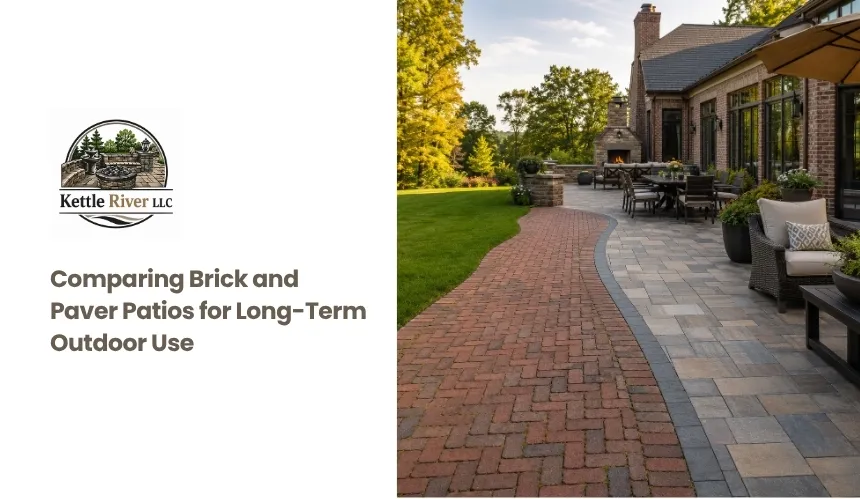
Comparing Brick and Paver Patios for Long-Term Outdoor Use
A patio is a long-term addition to any outdoor living space, so durability is often one of the most important factors when choosing a material. Brick patios and paver patios are both popular options because they offer an attractive appearance and can provide many years of reliable performance when installed correctly.
Although the two materials may look similar at first, they differ in the way they respond to weather, maintenance, ground movement, and everyday use. These differences can influence how long the patio lasts and how much care it requires over time.
This blog compares brick patios and paver patios to help homeowners understand which option typically lasts longer. By looking at their performance side by side, it becomes easier to choose the material that best fits long-term outdoor living needs.
1. Material Strength and Durability
Material strength is one of the first points to compare when deciding between a brick patio and a paver patio. Both can perform well outdoors, but they are made differently, and that difference affects how they handle pressure, foot traffic, and long-term wear.
How brick performs as a patio material
Brick has a classic look and has been used in outdoor spaces for many years. It is made from natural clay that is fired at high temperatures, which gives it strength and a firm surface suitable for patios, walkways, and garden areas.
However, brick can be more prone to chipping or surface wear over time, especially in areas with heavy use or frequent moisture exposure. Its durability often depends on installation quality, drainage, and how well the surface is maintained.
How concrete pavers handle long-term use
Concrete pavers are manufactured to create strong, uniform units that can handle regular outdoor use. Many pavers are designed specifically for patios, driveways, and walkways, making them a practical option for areas that need reliable long-term performance.
Because pavers come in different thicknesses and strength levels, the right product selection matters. When installed over a properly prepared base, concrete pavers can often handle daily use well and maintain their shape for many years.
2. Resistance to Weather and Outdoor Conditions
Outdoor patios remain exposed to changing weather throughout the year, making weather resistance an important factor when comparing materials. Rain, sunlight, temperature changes, and seasonal ground movement can all influence how well a patio performs over time.
How brick responds to moisture and temperature changes
Brick naturally withstands many outdoor conditions, but repeated exposure to moisture and freeze-thaw cycles can gradually affect its condition in certain climates. If water enters small surface openings and later freezes, it may contribute to chipping or surface deterioration over time.
Proper drainage and a stable foundation help reduce these risks and support the long-term performance of a brick patio. Regular maintenance also plays an important role in helping bricks withstand years of outdoor exposure.
How pavers perform in changing climates
Concrete pavers are designed to perform well under a wide range of weather conditions. Because each paver is installed individually, the surface can better accommodate minor ground movement without placing stress on the entire patio. This flexibility can be beneficial in areas where seasonal expansion and contraction are common.
Weather resistance also depends on installation quality and proper drainage. When these factors are addressed correctly, paver patios can continue performing well despite changing temperatures, rainfall, and everyday outdoor exposure.
3. Maintenance Needs Over Time
Both brick patios and paver patios require routine maintenance to preserve their appearance and support long-term performance. The amount of maintenance is generally manageable, but the type of care each material needs can differ over the years.
How routine care affects brick patio lifespan
Brick patios benefit from regular sweeping to remove dirt and debris, along with occasional washing to prevent stains and organic buildup. Homeowners should also keep an eye on the joints between the bricks, as weeds or moss may develop if they are left unattended for long periods.
Maintaining proper drainage and addressing small maintenance issues early can also help extend the life of a brick patio. Consistent care reduces unnecessary wear and helps the surface continue performing well over time.
How maintenance supports paver patio longevity
Paver patios also benefit from routine cleaning to remove dirt, leaves, and other debris that collect on the surface. In addition, the joint material between pavers may need occasional replenishment, and some homeowners choose to reseal the surface periodically to help preserve its appearance.
Regular maintenance also provides an opportunity to identify small issues before they become larger concerns. Keeping the patio clean and well-maintained helps support its long-term durability while preserving its overall appearance.
4. Repair and Replacement Differences
Even a well-built patio may eventually require repairs because of normal wear, weather exposure, or ground movement. When comparing brick patios and paver patios, it is helpful to consider not only how long they last but also how easily they can be repaired if damage occurs.
Why individual brick repairs can help extend use
If a brick becomes chipped, cracked, or settles unevenly, it is often possible to remove and replace only the affected bricks instead of rebuilding the entire patio. This targeted approach can help restore the appearance and functionality of the surface while keeping repair work relatively localized.
The success of these repairs depends on factors such as the condition of the surrounding bricks and the availability of matching materials. Addressing isolated damage early can also help prevent nearby sections from being affected over time.
How paver repairs support long-term performance
Paver patios offer a similar advantage because individual pavers can usually be lifted and replaced without disturbing the surrounding surface. If a section settles or a paver becomes damaged, repairs can often be limited to the affected area, making maintenance more straightforward.
This flexibility is one reason paver patios are valued for long-term use. Being able to repair small sections without replacing the entire patio helps maintain both the appearance and performance of the outdoor living space.
5. Which Patio Option Usually Lasts Longer?
Both brick patios and paver patios can provide decades of reliable performance when they are installed correctly and maintained consistently. Rather than one material being universally better, the expected lifespan often depends on factors such as site preparation, drainage, climate, installation quality, and the amount of maintenance the patio receives over the years.
When brick may provide long-lasting value
Brick can be an excellent choice for homeowners who appreciate its timeless appearance and are willing to perform routine maintenance. When installed on a properly prepared base with good drainage, a brick patio can remain attractive and functional for many years while adding classic character to the outdoor space.
Its longevity is often supported by consistent care and prompt attention to minor repairs. Addressing small issues before they become larger problems helps preserve both the appearance and structural integrity of the patio.
When pavers may be the better long-term choice
Pavers are often preferred by homeowners who want a patio that combines durability with easier long-term maintenance and repairs. Their flexible installation system allows individual pavers to be replaced if needed, helping maintain the overall condition of the patio without extensive reconstruction.
For properties that experience seasonal ground movement or changing weather conditions, this flexibility can be a practical advantage. Ultimately, the better choice depends on the homeowner’s design preferences, maintenance expectations, and the conditions the patio will experience throughout its lifespan.
Frequently Asked Questions
Can both brick and paver patios last for decades?
Yes. With proper installation, good drainage, and routine maintenance, both materials can provide many years of reliable performance.
Which patio material is easier to repair?
Both brick and paver patios allow individual units to be replaced if damage occurs, making localized repairs possible without replacing the entire patio.
Does climate affect patio lifespan?
Yes. Temperature changes, rainfall, freeze-thaw cycles, and soil movement can all influence how long a patio lasts before repairs are needed.
Do brick patios require more maintenance than paver patios?
Both require routine care, but the maintenance tasks may differ depending on the material, installation, and environmental conditions.
Is installation quality as important as the patio material?
Absolutely. A properly prepared base and correct installation practices have a major influence on the long-term performance of both brick and paver patios.