- Kettle-River
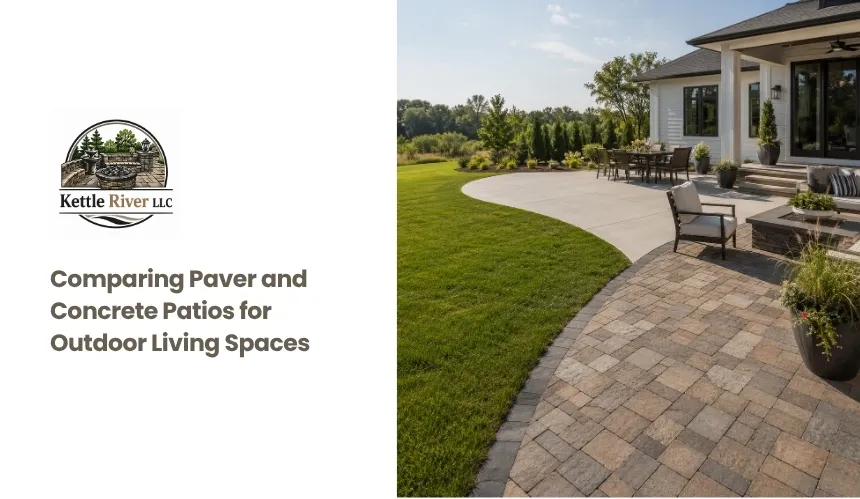
Comparing Paver and Concrete Patios for Outdoor Living Spaces
Outdoor patios create a comfortable space for relaxing, entertaining guests, and enjoying time outside the home. When planning a new patio, two of the most popular options are pavers and concrete. Both materials can improve the functionality and appearance of an outdoor living area, but each offers different advantages depending on the homeowner’s priorities.
Choosing between a paver patio and a concrete patio involves more than comparing appearance alone. Factors such as durability, maintenance, repair options, installation, and long-term value all play an important role in determining which material is the better fit for a particular property.
This blog compares paver patios and concrete patios to help homeowners understand the differences between the two. By looking at each option side by side, it becomes easier to decide which patio best supports long-term outdoor living needs.
1. Appearance and Design Flexibility
One of the biggest differences between paver patios and concrete patios is the level of design flexibility they offer. While both materials can create attractive outdoor living spaces, they achieve very different looks and provide different options for customization.
How pavers offer more design options
Pavers are available in a wide variety of colors, shapes, textures, and sizes, giving homeowners the freedom to create a patio that reflects their personal style. Different laying patterns, borders, and color combinations can be used to complement the home’s architecture or blend with existing landscaping. This flexibility makes it easier to create a truly customized outdoor living area.
Pavers also allow for creative features such as curved edges, decorative inlays, and seamless transitions into walkways or garden spaces. Because each unit is installed individually, adjustments can be made to accommodate unique layouts that may be difficult to achieve with a single concrete slab.
How concrete creates a clean, uniform look
Concrete offers a smooth, continuous surface that appeals to homeowners who prefer a simple and modern appearance. Its clean finish works well with many architectural styles and creates a cohesive look throughout the outdoor space. Decorative options such as stamped patterns, exposed aggregate, or colored finishes can also enhance its visual appeal.
Although concrete does not provide the same level of design flexibility as pavers, it can still achieve an attractive finished appearance. For homeowners who value simplicity and a streamlined design, a concrete patio can provide a practical and visually appealing solution.
2. Durability and Long-Term Performance
Both paver patios and concrete patios are designed for long-term outdoor use, but they respond differently to changing ground conditions, weather, and daily wear. Understanding how each material performs over time can help homeowners choose the option that best suits their property.
How each material handles everyday use
Paver patios are made from individual units that work together to create a flexible surface. Because the pavers are installed separately, they can better accommodate minor ground movement without affecting the entire patio. If one paver becomes damaged or settles, the issue is often limited to a small section rather than spreading across the whole surface.
Concrete patios create a solid, continuous slab that performs well under normal residential use. However, because the surface is a single piece, ground movement or shifting soil may affect a larger area if cracking occurs. The overall performance of either material also depends on proper installation and site preparation.
What affects long-term lifespan
The lifespan of both patio types is influenced by factors such as installation quality, drainage, climate, and routine maintenance. A well-prepared foundation and proper water management help both pavers and concrete remain stable and functional for many years.
Environmental conditions also play an important role. Freeze-thaw cycles, tree roots, heavy rainfall, and frequent use can all affect how the patio ages over time. Choosing the right material often depends on the conditions the patio will experience and the level of maintenance the homeowner is comfortable providing.
3. Maintenance and Repair Requirements
Maintenance needs are another important factor when comparing paver patios and concrete patios. While both surfaces benefit from routine care, the way they are maintained and repaired differs because of how each patio is constructed.
How routine maintenance differs
Paver patios typically require occasional sweeping, rinsing, and weed control between the joints to keep the surface looking its best. Some homeowners also choose to reapply joint sand or seal the pavers periodically to help maintain their appearance and stability.
Concrete patios generally require basic cleaning to remove dirt, stains, and organic buildup. Depending on the finish and local weather conditions, sealing the concrete from time to time may also help protect the surface and preserve its appearance over the years.
Which material is easier to repair
One advantage of pavers is that individual units can often be removed and replaced if they become damaged or stained. This allows repairs to be made to a specific area without disturbing the rest of the patio, helping maintain a consistent appearance.
Concrete repairs are handled differently because the patio is a single slab. While small cracks can often be repaired, larger damage may require patching or replacing a more significant section. Matching the repaired area to the existing concrete may also be more noticeable than replacing individual pavers.
4. Installation Time and Overall Cost
Installation time and cost can vary for both paver and concrete patios, depending on the patio size, site conditions, design details, and preparation required. The better choice often depends on whether the homeowner values faster installation, detailed customization, or long-term flexibility.
How installation methods compare
Concrete patios are usually poured as one continuous surface after the area is prepared and forms are set. This process can be efficient for simple patio layouts, especially when the design does not require many custom details. However, the concrete also needs time to cure before the patio is ready for regular use.
Paver patios require more individual placement because each paver is installed separately over a prepared base. This can take longer, especially for detailed patterns or larger patio areas. However, once the installation is complete, the surface is typically ready to use sooner than freshly poured concrete.
What influences the overall investment
The total cost depends on factors such as material selection, labor, patio size, design complexity, drainage needs, and site preparation. A basic concrete patio may cost less upfront in many cases, while decorative finishes or stamped designs can increase the final price.
Paver patios may involve a higher initial investment because of the detailed installation process and individual materials. However, easier repair options and design flexibility can add long-term value for homeowners who want a more customized outdoor living space.
5. Which Patio Is the Better Choice for Your Property
There is no single answer that works for every home because the right patio depends on the homeowner’s priorities. Budget, design preferences, maintenance expectations, and how the outdoor space will be used all play an important role in determining which material is the better fit.
When pavers may be the better option
Pavers are often a good choice for homeowners who want greater design flexibility and a patio with a more customized appearance. The wide selection of colors, shapes, textures, and laying patterns makes it easier to create a unique outdoor living space that complements the home’s style.
They may also be the preferred option for properties where easier repairs are important. Since individual pavers can often be replaced without disturbing the surrounding area, homeowners can address isolated damage while maintaining the overall appearance of the patio.
When concrete may be the better option
Concrete can be a practical choice for homeowners who prefer a clean, uniform appearance and a straightforward installation process. Its continuous surface works well with many home styles and can be enhanced with decorative finishes to create a more customized look.
For projects where simplicity and a lower initial investment are important considerations, a concrete patio may provide the right balance of appearance and functionality. Comparing both options carefully helps homeowners choose a patio that best supports their long-term outdoor living goals.
Frequently Asked Questions
Do paver patios and concrete patios both add usable outdoor living space?
Yes. Both options can create functional outdoor areas for relaxing, entertaining, dining, or spending time with family and friends.
Which patio material offers more design flexibility?
Paver patios generally provide more design flexibility because they are available in a wide variety of colors, shapes, textures, and installation patterns.
Can both patio types be customized?
Yes. Concrete can be stamped, stained, or finished in different ways, while pavers offer numerous combinations of colors, sizes, and layouts.
Does climate influence which patio material performs better?
Climate, drainage, soil conditions, and seasonal weather can all affect the long-term performance of both paver and concrete patios. These factors should be considered before selecting a material.
Are both patio options suitable for outdoor furniture?
Yes. Both paver and concrete patios provide stable surfaces for outdoor furniture, grills, and other common backyard features when installed properly.